Dr. Vinod Dubey

Bone and Joint Problems in Children

Tips to improve child's bone health

Tips to Keep Your Child’s Bones Strong and Healthy

Every parent wants their child to grow strong, active, and healthy. While height and weight are commonly discussed, bone health is equally important during childhood. Strong bones help children run, play sports, avoid injuries, and grow properly. Today, many parents search for a child bone specialist in Thane or a pediatric orthopedic doctor near me when children complain of bone pain or frequent injuries. The good news is that simple daily habits can significantly improve your child’s bone strength. Let’s understand how you can naturally keep your child’s bones strong and healthy. Why Bone Health Is Important for Children Bones grow rapidly during childhood and adolescence. Nearly 90% of bone strength develops before adulthood, which means early care is essential. Healthy bones help children: Maintain proper growth and posture Perform well in sports and outdoor activities Prevent fractures and injuries Avoid future orthopedic problems Many parents consult a pediatric orthopedist in Thane when they notice walking problems, knock knees, or frequent fractures. Early attention makes a big difference. 1. Give Calcium-Rich Foods Daily Calcium is the foundation of strong bones. Without enough calcium, bones may become weak and prone to injury. Best Calcium Sources for Kids Milk, curd, paneer, and cheese Ragi and sesame seeds Almonds and nuts Green leafy vegetables Soy products and pulses Children who avoid dairy should receive calcium through alternative foods or medical guidance from a children bone doctor. 2. Ensure Adequate Vitamin D Vitamin D helps the body absorb calcium properly. Many urban children suffer from Vitamin D deficiency due to indoor lifestyles. Easy Ways to Get Vitamin D Morning sunlight exposure for 15–20 minutes Eggs and fish Fortified milk products Supplements if advised by a pediatric orthopedic specialist Parents often visit a child bone specialist in Thane when children experience bone pain caused by Vitamin D deficiency. 3. Encourage Outdoor Play and Physical Activity Physical activity is one of the most effective ways to strengthen bones naturally. Bone-Strengthening Activities Running and jumping Cycling Skipping rope Football and cricket Dancing and playground games Experts recommend at least 60 minutes of active play daily. Children who stay active develop better bone density and fewer orthopedic problems. 4. Limit Mobile and Screen Time Excess screen time reduces movement and weakens muscles and bones. Sedentary habits are increasingly linked to pediatric orthopedic concerns. Encourage: Outdoor hobbies Sports participation Family physical activities Active children are less likely to need treatment for child sports injuries or posture-related problems. 5. Maintain Healthy Body Weight Both underweight and overweight children can develop bone issues. Underweight children may have poor bone development Overweight children experience extra pressure on knees and joints Parents frequently seek help from a pediatric orthopedic doctor in Thane for knee pain, walking difficulty, or joint stress caused by weight imbalance. 6. Include Protein for Bone and Muscle Growth Protein works together with calcium to build strong bones and muscles. Healthy protein sources include: Dal and legumes Eggs Chicken and fish Nuts and seeds Sprouts and soy products Balanced nutrition supports overall skeletal development. 7. Prevent Playtime Injuries Children love sports and outdoor activities, but safety is essential. Parents should: Choose proper sports shoes Encourage warm-up exercises Ensure safe play environments Teach correct sports techniques Early management by a pediatric fracture treatment specialist helps prevent long-term complications after injuries. 8. Watch for Common Bone Problems in Children Some children may develop orthopedic conditions during growth. Common concerns include: Knock knees in children Bow legs Flat feet Clubfoot conditions Growth plate injuries Frequent fractures Early evaluation by a clubfoot treatment specialist or pediatric orthopedist ensures proper correction and healthy development. Warning Signs Parents Should Not Ignore Consult a specialist if your child has: Frequent falls or fractures Bone or joint pain Delayed walking milestones Abnormal walking pattern Difficulty running or playing Timely consultation with a pediatric orthopedic doctor near you helps detect problems early and avoids future complications. Build Lifelong Bone Health Habits Parents play the biggest role in strengthening children’s bones. ✔ Provide balanced nutrition✔ Encourage outdoor play daily✔ Reduce junk food intake✔ Promote physical activity✔ Schedule regular bone health check-ups Healthy habits today help children grow into strong and active adults. About Dr. Vinod Dubey – Pediatric Orthopedic Doctor in Thane Dr. Vinod Dubey is a trusted Pediatric Orthopedic Doctor in Thane specializing in bone, joint, and growth-related conditions in children. He provides comprehensive care for pediatric fractures, knock knees, clubfoot correction, flat feet, growth plate injuries, and child sports injuries. With a child-friendly approach and advanced orthopedic treatment methods, Dr. Dubey focuses on early diagnosis, accurate treatment, and long-term bone health for growing children. Parents looking for a reliable child bone specialist in Thane or expert consultation for children’s orthopedic problems can seek specialized evaluation and treatment under his care.

Tips to Keep Your Child’s Bones Strong and Healthy Read More »
Joint pain in children

Causes of Joint Pain in Children

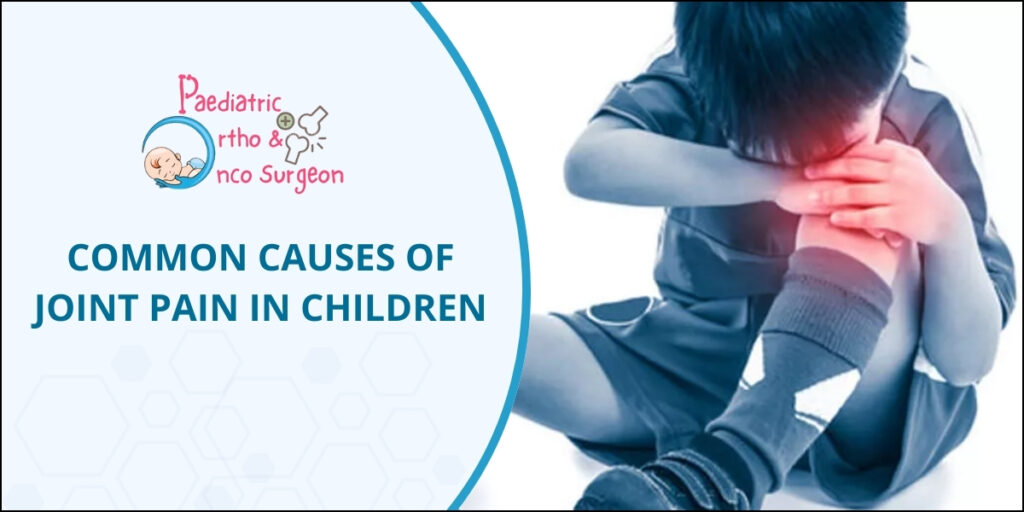
It can be worrying for any parent to hear their child complain of sore knees, stiff legs, or painful elbows. You might wonder if it’s just a normal part of growing up or something more serious. The good news is that in most cases, joint pain in children is temporary and harmless. However, understanding the different reasons behind the pain can help you know when to relax and when it might be time to see a specialist. As a parent, it is important to become a detective of sorts. Does the pain happen only at night? Does it come after a long day of playing football? Or is your child waking up with stiff joints in the morning? The answers to these questions can point toward the root cause. Let’s break down the most common causes of joint pain in children. 1. The Usual Suspect: Growing Pains If your child is between the ages of 3 and 9, and often wakes up in the night crying because their legs hurt, “growing pains” are the most likely culprit . Despite the name, experts aren’t entirely sure that growth itself is the cause, but the pattern is very recognizable . How to spot it: Timing: The pain usually strikes late in the evening or at night. By morning, your child is usually running around with no pain at all . Location: It typically affects both legs, often in the thighs, calves, or behind the knees . Feeling: It feels like an ache or a throbbing sensation. No Limping: Children with growing pains usually don’t limp or show signs of weakness during the day. The best remedy? A good massage, a warm bath before bed, and some extra cuddles usually do the trick . 2. Too Much of a Good Thing: Overuse Injuries With the rise of competitive sports and specialized training at young ages, overuse injuries have become very common . Unlike an acute injury like a fall, overuse injuries happen slowly over time. They occur when a child repeats the same motion over and over again, stressing the joints and muscles without enough time to heal. This is considered mechanical pain, meaning it is related to activity . You might notice your young athlete complaining of pain in their knees, elbows, or heels specifically after playing sports or running. 3. When the Body Attacks Itself: Juvenile Idiopathic Arthritis (JIA) While arthritis might seem like an old person’s disease, it actually affects about 3 in 1,000 children . Juvenile Idiopathic Arthritis (JIA) is the most common type of chronic arthritis in kids. It is an autoimmune disorder, which means the body’s immune system mistakenly attacks its own healthy joint tissues, causing inflammation . The keyword here is inflammation. Unlike growing pains or overuse injuries, JIA causes persistent symptoms. Red flags for JIA include : Morning Stiffness: Your child is stiff and has trouble moving around after waking up. This often improves as they get moving during the day . Swelling: The joint looks puffy or swollen. Warmth: The joint feels warm to the touch. Persistence: The pain and stiffness last for more than 6 weeks . It is also crucial to know that JIA can cause silent uveitis, an inflammation of the eye that can damage vision without any obvious symptoms, which is why regular eye checks are vital for these children . 4. Infections and Other Illnesses Sometimes, joint pain is a sign that the body is fighting something else. Several infectious and medical conditions can manifest as pain in the joints . Reactive Arthritis: Sometimes after a bacterial or viral infection (like a stomach bug or strep throat), the body’s immune response can cause temporary joint pain and swelling. Septic Arthritis: This is a serious bacterial infection inside the joint itself. It requires immediate medical attention. It usually presents as a single, extremely painful, hot, and swollen joint, and the child often looks very unwell or has a fever . Other Conditions: In rare cases, blood disorders or even bone malignancies can present with bone or joint pain, which is why persistent, unexplained pain should always be checked . When to See a Doctor? While most aches are benign, you should consult a doctor if your child experiences any of the following: Swelling, redness, or warmth around a joint. Persistent pain that lasts for several weeks or keeps coming back. Morning stiffness that doesn’t go away quickly. Limping, especially if it is unexplained. Joint pain accompanied by a fever, rash, or extreme fatigue . Expert Care for Little Joints in Thane and Mumbai If you are concerned about your child’s joint pain, getting the right diagnosis is the first step toward relief. As a parent, you want a specialist who understands the unique nature of a child’s growing body. Dr. Vinod Dubey is a renowned Pediatric Orthopedic Surgeon in Thane and a trusted Pediatric Joint pain doctor in Mumbai. With his expertise, he helps families distinguish between simple growing pains and conditions that require medical intervention. Whether your child needs treatment for an injury, JIA, or any other bone and joint issue, Dr. Vinod Dubey provides expert care to get your little one back to playing happily. Frequently Asked Questions (FAQs) 1. When should I worry about my child’s joint pain? You should worry if the joint looks swollen, red, or feels hot. If your child has stiffness in the morning that lasts more than 30 minutes, or if the pain is persistent and causes them to limp, it is best to see a doctor. 2. Can kids really get arthritis? Yes, they can. It is called Juvenile Idiopathic Arthritis (JIA). It is an autoimmune condition where the body attacks its own joints, causing inflammation, pain, and stiffness. It is more common than many people realize, affecting thousands of children. 3. What is the difference between growing pains and arthritis? Growing pains typically occur at night in both legs and are gone by morning, with no limping or swelling. Arthritis pain often involves swelling and stiffness that is worse in the morning or after naps and improves as the child moves around during the day. 4. What blood tests are done for joint pain in children? Doctors might order blood

Causes of Joint Pain in Children Read More »

Bone and Joint Problems in Children

Common Bone and Joint Problems in Children and Their Treatments

As parents, we watch our children grow with a mix of pride and worry. Every stumble, every complaint of an “ouch,” can send our minds racing. While many childhood bumps and bruises are minor, understanding the difference between a simple scrape and a potential bone or joint issue is crucial. Children’s musculoskeletal systems are not just smaller versions of an adult’s; they are growing, developing, and uniquely vulnerable to specific conditions. Early recognition and proper treatment by a specialist, like a pediatric orthopedic doctor, can make a world of difference in ensuring a healthy, active future for your child. Common bone and joint problems seen in children 1. Flat Feet (Pes Planus) Most infants are born with flat feet, and arches typically develop by age 6. Flexible flatfoot, where the arch appears when the child tip-toes but disappears when standing flat, is very common and often painless. Treatment is rarely needed unless the child experiences pain, stiffness, or it affects walking. In such cases, a pediatric orthopedic surgeon may recommend arch-supporting shoes or custom orthotics and stretching exercises. 2. In-Toeing (Pigeon Toes) In-toeing is when a child’s feet turn inward instead of pointing straight ahead when walking. It’s usually caused by one of three conditions: metatarsus adductus (curved foot), internal tibial torsion (twisted shin bone), or increased femoral anteversion (twisted thigh bone). The vast majority of cases correct themselves naturally as the child grows. Braces, special shoes, or physical therapy are seldom needed. Surgery is an extremely rare option only considered in severe cases that persist beyond age 9-10. 3. Knock-Knees (Genu Valgum) and Bowlegs (Genu Varum) It’s normal for toddlers to have bowlegs, which often straighten out by age 3, followed by a period of knock-knees until around age 7-8. These conditions are usually part of normal development. Parents should consult a children’s bone specialist if the curvature is severe, asymmetric (one leg different from the other), worsening, or causing pain or difficulty running. Underlying causes like rickets or Blount’s disease need to be ruled out. 4. Osgood-Schlatter Disease This is a common cause of knee pain in active, growing adolescents. It involves inflammation of the growth plate just below the kneecap where the tendon attaches. It’s often linked to sports that involve running and jumping. Treatment focuses on rest, ice, compression, and elevation (RICE), along with stretching and strengthening exercises. The condition typically resolves once the child stops growing. 5. Scoliosis Scoliosis is a sideways curvature of the spine that most often develops during the growth spurt just before puberty. Mild cases require monitoring. Moderate curves may be treated with a specialized brace to prevent further progression. Severe scoliosis may require spinal fusion surgery to correct the curvature and prevent future complications. Early detection through school screenings or pediatrician checks is vital. 6. Fractures and Sports Injuries Active children are prone to injuries. Growth plate fractures are particularly concerning as they can affect future bone growth. Any significant injury causing severe pain, deformity, or an inability to bear weight should be evaluated immediately by a pediatric orthopaedic doctor to ensure proper healing and alignment. When to Seek Help from a Pediatric Orthopedic Specialist While many childhood conditions are self-correcting, you should consider consulting a specialist if your child experiences: Persistent pain in bones, joints, or muscles. Limping or a noticeable change in walking pattern. Swelling, redness, or warmth around a joint. Joint stiffness or reduced range of motion. Significant asymmetry in limb length or appearance. A deformity that seems to be worsening rather than improving. Finding the Right Care in Thane and Mumbai If your child is experiencing any bone, joint, or muscle issues, seeking expert care is the first step toward effective treatment. Dr. Vinod Dubey is a renowned Pediatric Orthopedic doctor in Thane and Mumbai, specializing in the diagnosis and management of all childhood musculoskeletal disorders. With expertise in both non-surgical and surgical treatments, Dr. Dubey and his team are dedicated to providing compassionate, child-friendly care to ensure the best possible outcomes for your little one. Don’t hesitate to seek a professional opinion. Early intervention by a Dr. Vinod Dubey – pediatric bone specialist in Thane can provide peace of mind and set your child on the path to a healthy, active life.

Common Bone and Joint Problems in Children and Their Treatments Read More »