
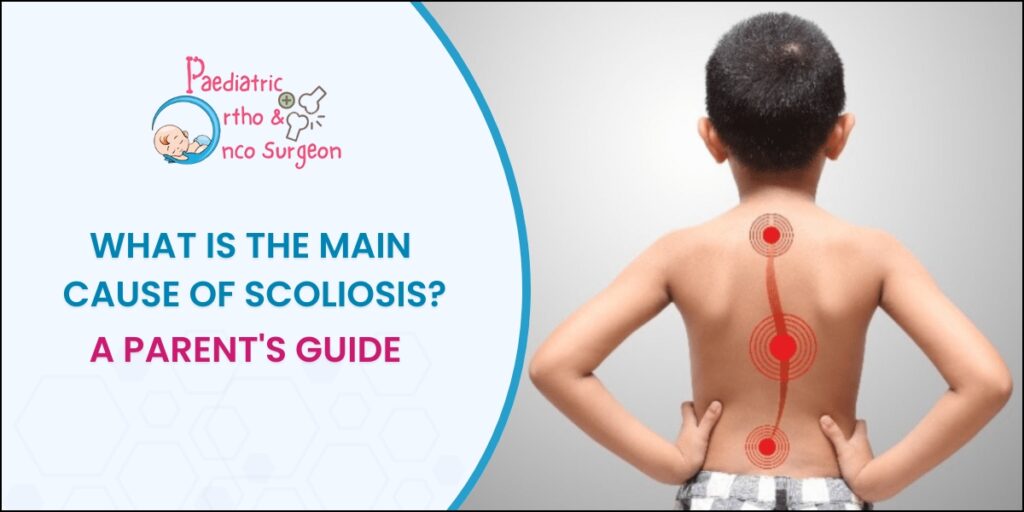
What is the main cause of scoliosis?
What are the main causes of scoliosis? If you or your child has been diagnosed with scoliosis, one of the first and most pressing questions is, “Why did this happen?” You’re not alone in this query. Scoliosis, a condition characterized by an abnormal lateral curvature of the spine, affects millions. However, pinning down a single cause can be tricky. The truth is, the main cause of the most common type of scoliosis is actually unknown, a category doctors call “idiopathic.” Let’s break down the different types and their origins to bring some clarity. The Most Common Culprit: Idiopathic Scoliosis The vast majority of scoliosis cases—around 80%—are classified as idiopathic. This term simply means “of unknown origin.” While we don’t know the exact trigger, research strongly suggests a genetic component. It often runs in families, and if a parent or sibling has scoliosis, the risk for other children is higher. Idiopathic scoliosis is most frequently diagnosed during the growth spurt just before puberty, between the ages of 10 and 15. This is known as Adolescent Idiopathic Scoliosis (AIS). Because the cause is unknown, prevention isn’t currently possible, but early detection through school screenings or parental observation is crucial for effective management. Other Significant Causes of Scoliosis While idiopathic is the leader, other forms have more identifiable roots: Congenital Scoliosis: This type is present at birth. It occurs when the spine fails to form completely or properly during fetal development. It’s a structural issue, often involving misshapen vertebrae that cause the spine to curve as the child grows. Neuromuscular Scoliosis: This form is a secondary complication of other conditions that affect the nerves and muscles. When the muscles that support the spine are weak or unbalanced, they can’t hold the spine straight. Underlying conditions include Cerebral Palsy, Muscular Dystrophy, and Spina Bifida. Degenerative Scoliosis (De Novo Scoliosis): This appears in older adults. It’s not a continuation of childhood scoliosis but develops later in life due to the wear and tear of the spine. Factors like osteoporosis, disc degeneration, and joint arthritis can cause the spine to curve over time. Seeking Expert Care in Thane and Mumbai Understanding the cause of scoliosis is the first step toward effective management. If you suspect your child has signs of a spinal curvature, such as uneven shoulders or a prominent shoulder blade, seeking an evaluation from a specialist is essential. Early diagnosis can open the door to a range of non-surgical and surgical treatments that can prevent the curve from progressing and ensure a healthy, active future. Dr. Vinod Dubey – Pediatric Orthopedic Surgeon in Thane, Mumbai Consult Dr. Vinod Dubey is a renowned Pediatric Orthopedic Surgeon in Thane, Mumbai with extensive experience in diagnosing and treating childhood spinal conditions, including all forms of scoliosis. Frequently Asked Questions (FAQs) 1. Can bad posture cause scoliosis? No, slouching or carrying a heavy backpack does not cause scoliosis. However, poor posture can sometimes mimic the appearance of a curve or make an existing idiopathic curve more noticeable. Scoliosis is a structural, three-dimensional deformity of the spine, not a postural habit. 2. At what age does scoliosis usually start? The onset depends on the type. The most common form, Adolescent Idiopathic Scoliosis, typically appears between ages 10 and 15. Congenital scoliosis is present at birth, while Infantile Idiopathic Scoliosis can be detected in children under 3. Degenerative scoliosis develops in adulthood, usually after age 50. 3. Is scoliosis a disability? In most cases, no. Many people with mild to moderate scoliosis live full, active lives without any restrictions. However, in severe, untreated cases where the curvature causes significant pain, breathing difficulties, or mobility issues, it could be classified as a disability, often requiring surgical intervention.
What is the main cause of scoliosis? Read More »