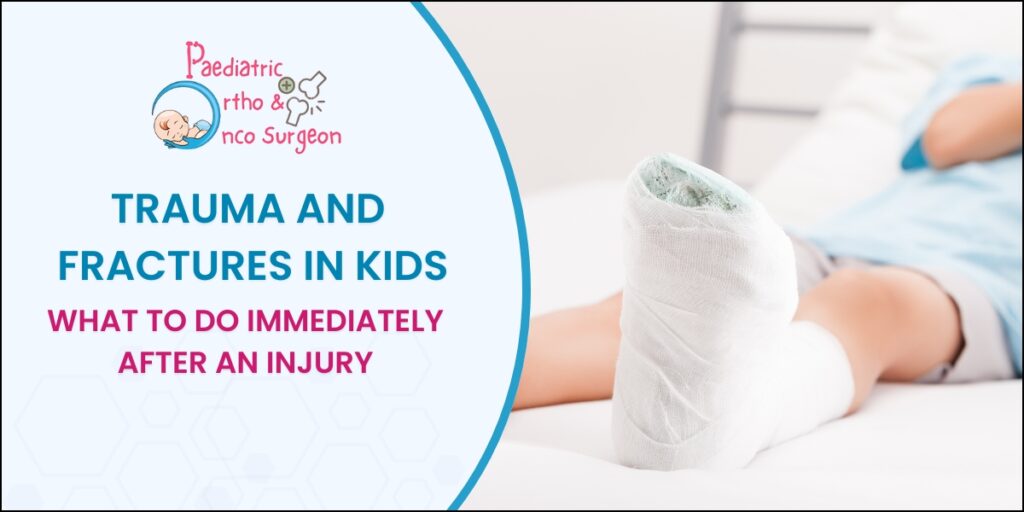
Trauma & Fractures in Kids: What to Do Immediately After an Injury
As a parent, watching your child get hurt is a heart-stopping moment. Whether it’s a fall from the playground, a sports mishap, or an accident at home, injuries in children are distressing for both the child and the caregiver. While bumps and bruises are common, more serious trauma like fractures require immediate and correct action. In this guide, we’ll walk you through the crucial first steps to take after your child suffers an injury, how to identify a potential fracture, and when to seek expert help. Recognizing the Signs: Is It a Fracture? Children’s bones are more flexible than adults, but they are still susceptible to fractures. Sometimes, a break isn’t obvious. Look for these signs: Immediate and severe pain that worsens with movement or touch. Noticeable deformity or unusual bending of the limb. Significant swelling and bruising that appears quickly. Inability or refusal to use the limb (e.g., won’t put weight on a leg or use an arm). A “snapping” or “grinding” sound at the time of injury. The First 5 Crucial Steps (Do’s & Don’ts) 1. Stay Calm & Reassure Your Child: Your calmness will help soothe your child’s fear. Panic can elevate their anxiety and pain. 2. Immobilize the Injured Area: DO NOT try to straighten or realign the bone. Gently support the limb with a makeshift splint—use a rolled-up newspaper, a cardboard box, or even a firm pillow. Secure it loosely with bandages or cloth. 3. Apply Cold Compress: Wrap an ice pack or a bag of frozen peas in a thin towel. Apply it to the injured area for 15-20 minutes to reduce swelling and pain. Avoid placing ice directly on the skin. 4. Elevate the Limb: If possible, raise the injured arm or leg above the level of the heart. This helps minimize swelling. 5. Seek Professional Medical Attention: This is the most critical step. Do not give your child any food or drink until they have been seen by a doctor, in case sedation or surgery is needed. Treatment in Pediatric Orthopedics Treatment depends on the fracture’s type, location, and the child’s age. Options range from simple casting to advanced, minimally invasive surgical procedures. The goal is always to achieve the best possible alignment with the least disruption to the child’s life and growth. Prevention is Key While not all accidents are avoidable, you can minimize risks: Ensure proper supervision during play and sports. Use age-appropriate safety gear (helmets, knee pads). Childproof your home to prevent falls. Encourage strength and conditioning for young athletes. If your child has suffered an injury, timely and expert care is the foundation for a full recovery. Dr. Vinod Dubey, a renowned Pediatric Orthopedic Surgeon in Thane, provides comprehensive and compassionate care for childhood trauma and fractures. With a focus on child-friendly treatment and preserving future growth, he ensures your little one gets back to being active, safely and completely. FAQs: Pediatric Trauma & Fractures Q1: How can I tell if my child’s injury is a sprain or a fracture? It can be difficult to tell apart. Significant deformity, inability to bear weight, and pain directly over the bone are strong indicators of a fracture. When in doubt, always get an X-ray from a healthcare professional. Q2: What are the most common fractures in children? Children commonly fracture the forearm bones (radius and ulna) from falling on an outstretched arm, followed by collarbone (clavicle) and lower leg fractures. Q3: How long does a child’s bone fracture take to heal? Healing is typically faster in children than adults. Simple fractures may heal in 3-6 weeks, while more complex injuries can take several months. A pediatric orthopedist will monitor progress. Q4: Can a childhood fracture affect growth? If the fracture involves the growth plate, it can potentially affect bone growth. This is why expert management by a pediatric orthopedic specialist like Dr. Vinod Dubey is crucial to monitor and mitigate any long-term impact.
Trauma & Fractures in Kids: What to Do Immediately After an Injury Read More »