Dr. Vinod Dubey

Clubfoot correction treatment in thane

Clubfoot in kids

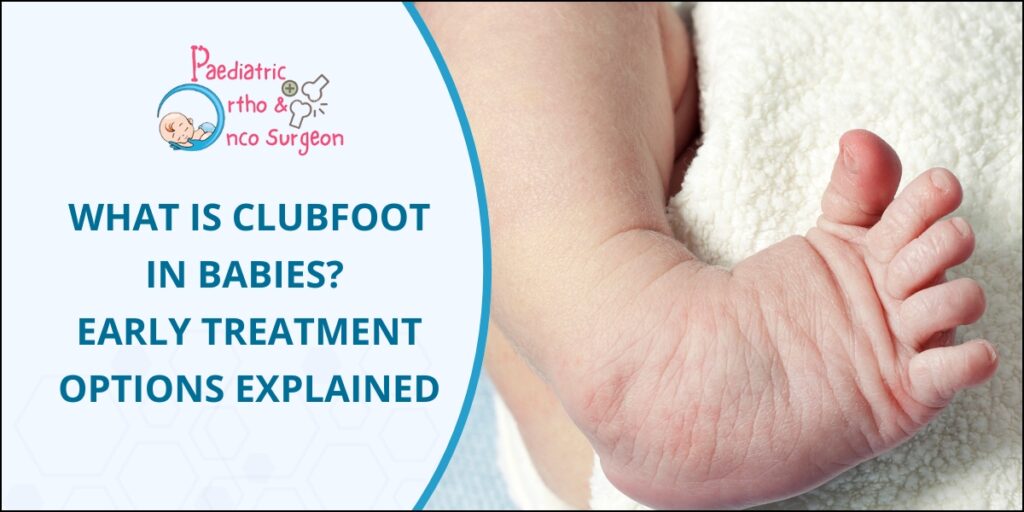
What Is Clubfoot in Babies? Early Treatment Options Explained

When a baby is born, parents carefully check every tiny detail—from fingers and toes to their first cry. Sometimes, a condition called clubfoot is noticed right away. While it may look concerning, the good news is that clubfoot is treatable, especially when addressed early. What Is Clubfoot? Clubfoot, medically known as Congenital Talipes Equinovarus (CTEV), is a condition where a baby’s foot is twisted out of its normal position. The foot may turn inward or downward, making it look like it’s pointing the wrong way. It can affect: One foot (unilateral clubfoot) Both feet (bilateral clubfoot) This condition is present at birth and is one of the most common congenital (birth-related) foot deformities. What Causes Clubfoot? The exact cause of clubfoot isn’t always clear, but several factors may contribute: Genetics: It can run in families Position in the womb: Limited space may affect foot positioning Neuromuscular conditions: In rare cases, it’s linked to other medical issues Importantly, nothing parents did during pregnancy causes clubfoot—it’s not preventable. Must Read Article : Clubfoot in Newborns: Causes and Treatment How Is Clubfoot Diagnosed? Clubfoot is often: Detected during pregnancy through ultrasound Confirmed at birth through physical examination Doctors usually don’t need complex tests unless other conditions are suspected. Why Early Treatment Matters Starting treatment early—ideally within the first few weeks of life—gives the best results. A newborn’s bones and tissues are soft and flexible, making correction easier and more effective. Without treatment, clubfoot can lead to: Difficulty walking Pain and discomfort Abnormal gait (walking pattern) Early Treatment Options for Clubfoot 1. The Ponseti Method (Gold Standard Treatment) The Ponseti method is the most widely used and effective treatment worldwide. It involves: Gentle manipulation of the foot Serial casting (changing casts weekly to gradually correct the position) A minor procedure called Achilles tenotomy (if needed) Use of bracing to maintain correction ✔ Success rate: Over 90% when done properly✔ Non-surgical and safe for infants 2. Bracing (Foot Abduction Brace) After initial correction, babies wear special braces to prevent the foot from turning back. Typically worn full-time initially, then only during sleep Duration: Up to 4–5 years Consistency is key—skipping brace use can lead to relapse. 3. Surgery (Rare Cases) Surgery is considered only when: The condition is severe Non-surgical methods don’t fully correct the foot Modern treatments aim to avoid major surgery whenever possible. What Is the Long-Term Outlook? With early and proper treatment: Most children walk normally They can run, play, and wear regular shoes There are usually no long-term limitations Early care truly makes a lifelong difference. Tips for Parents Start treatment as early as possible Follow the doctor’s instructions carefully Be consistent with braces Attend regular follow-ups Your involvement plays a huge role in successful recovery. About Dr. Vinod Dubey – Pediatric Orthopedic Specialist in Mumbai Dr. Vinod Dubey is a highly experienced Pediatric Orthopedic and Clubfoot Surgeon in Mumbai, known for his expertise in treating complex foot deformities in children using advanced, minimally invasive techniques like the Ponseti method. He focuses on early diagnosis, personalized treatment plans, and long-term outcomes, helping children achieve normal mobility and improved quality of life. FAQs About Clubfoot 1. Is clubfoot painful for babies?No, clubfoot itself is not painful in infants. However, untreated cases can cause discomfort later in life. 2. Can clubfoot come back after treatment?Yes, relapse can happen if braces are not used as advised. Regular follow-ups help prevent this. 3. Will my child be able to walk normally?Yes! With proper treatment, most children walk, run, and play like any other child. 4. Is surgery always required?No, most cases are successfully treated without major surgery using the Ponseti method. 5. How long does treatment take?Initial correction takes a few weeks, but bracing continues for several years to maintain results.

What Is Clubfoot in Babies? Early Treatment Options Explained Read More »
Clubfoot in Newborns - Causes

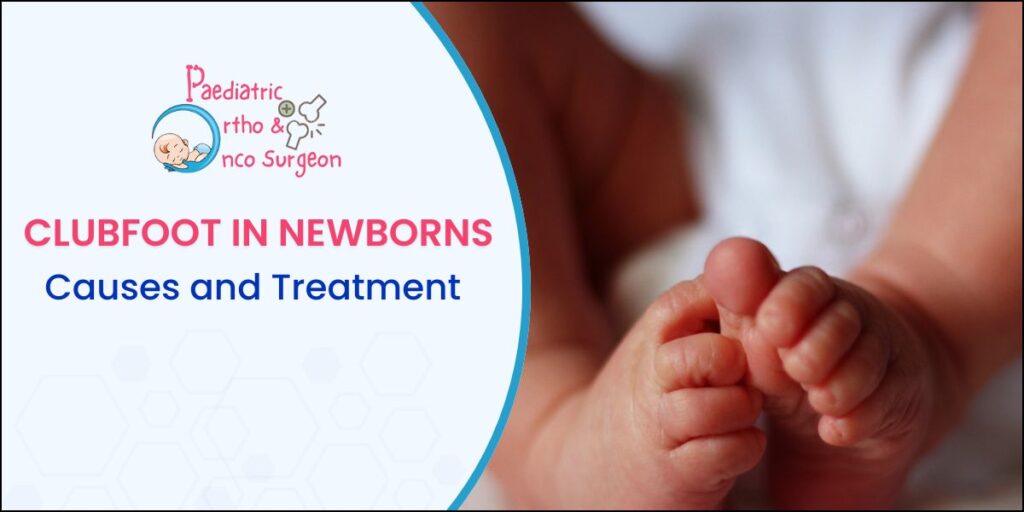
Clubfoot in Newborns: Causes and Treatment

The birth of a child is a moment of immense joy. However, for some parents, that joy can be mixed with concern if they notice their newborn’s foot turned inward and downward. This common condition, known as clubfoot (or Talipes Equinovarus), affects approximately 1 in every 1,000 babies. While the sight can be alarming for new parents, it’s crucial to know that clubfoot is highly treatable, especially with early intervention. What is Clubfoot? Clubfoot is a congenital foot deformity where a baby’s foot is twisted out of its normal position. It is not a painful condition for the infant but, if left untreated, can lead to significant difficulty walking and long-term disability. The foot typically appears to point downward (equinus) and turn inward (varus), with the sole facing sideways or even upward. It can affect one foot (unilateral) or both feet (bilateral). What Causes Clubfoot in Newborns? The exact cause of clubfoot is not always known, but it is primarily considered an idiopathic condition, meaning it arises without a clear reason. However, research points to a combination of genetic and environmental factors: Genetics: Clubfoot often runs in families. If a parent or a sibling had clubfoot, the newborn has a higher risk of having it. Environmental Factors: Certain factors during pregnancy, such as smoking or viral infections, may increase the risk. Other Conditions: In some cases, clubfoot can be associated with other neuromuscular conditions like spina bifida or arthrogryposis. It is important to understand that clubfoot is not caused by the baby’s position in the womb. Effective Clubfoot Treatment: The Gold Standard The goal of treatment is to achieve a functional, pain-free foot that looks normal and allows for a full range of motion. The good news is that surgery is rarely the first option anymore. The Ponseti Method is the internationally recognized gold standard for clubfoot treatment. This non-surgical technique has a success rate of over 95% when performed correctly and followed diligently. The process involves two main phases: Casting Phase: A specialist, like a pediatric orthopedic surgeon, will gently stretch the baby’s foot toward the correct position and apply a long-leg cast to hold it. This process is repeated weekly for about 5-8 weeks, with each cast gradually correcting the alignment. Bracing Phase (The Most Critical Step): After the final cast, a minor procedure (a tenotomy) is often performed to release the Achilles tendon. This is followed by the most crucial part: bracing. The child must wear a special foot abduction brace for a prescribed number of hours each day (usually full-time for 3 months, then at night and nap times for up to 4-5 years). Adherence to bracing is essential to prevent relapse. Finding the Right Care: Why a Specialist Matters Successful clubfoot correction requires expertise and experience. Choosing a doctor who specializes in the Ponseti Method is the single most important decision you can make for your child’s outcome. For parents in the region, Dr. Vinod Dubey is widely recognized as a leading pediatric orthopedic doctor in Thane, Mumbai. With extensive experience in managing complex pediatric orthopedic conditions, including clubfoot, Dr. Dubey is dedicated to providing compassionate, evidence-based care using the Ponseti protocol. His approach ensures that children not only achieve correction but also go on to lead active, normal lives. Meet Dr. Vinod Dubey – Leading Pediatric Orthopedic Doctor in Thane, Mumbai A diagnosis of clubfoot can feel overwhelming, but it is important to remain positive. With early diagnosis and expert treatment, children with clubfoot can run, play, and participate in sports just like their peers. The journey requires commitment, especially during the bracing phase, but the result—a healthy, functional foot—is well worth the effort. If you have concerns about your child’s foot development, do not hesitate to seek a consultation with a specialist. Early intervention is key to a successful correction. Frequently Asked Questions about Clubfoot Correction 1. What is the main cause of clubfoot? The primary cause of clubfoot (Talipes Equinovarus) is often idiopathic, meaning it arises from a combination of genetic and environmental factors without a single known cause. It is frequently linked to family history, making genetics a significant factor. It is not caused by the baby’s position in the womb. 2. Can clubfoot be corrected? Yes, clubfoot can be successfully corrected in the vast majority of cases. The gold standard treatment is the non-surgical Ponseti Method, which involves gentle manipulation, casting, and bracing. This method, championed by specialized pediatric orthopedic doctors like Dr. Vinod Dubey in Thane, has a success rate of over 95% when protocols are followed correctly. 3. Is clubfoot a disability? If left completely untreated, clubfoot can become a disability, causing difficulty walking, pain, and long-term mobility issues. However, with modern early intervention and proper treatment by a pediatric orthopedic specialist, children achieve full, normal function. Treated clubfoot is not considered a disability, and children can run, play sports, and lead active lives.

Clubfoot in Newborns: Causes and Treatment Read More »