When a baby is born, parents carefully check every tiny detail—from fingers and toes to their first cry. Sometimes, a condition called clubfoot is noticed right away. While it may look concerning, the good news is that clubfoot is treatable, especially when addressed early.
What Is Clubfoot?
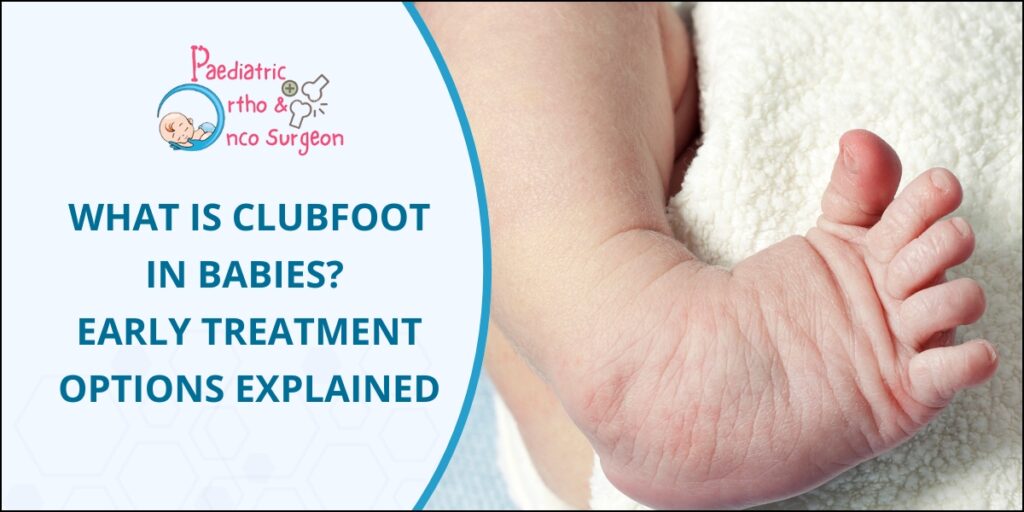
Clubfoot, medically known as Congenital Talipes Equinovarus (CTEV), is a condition where a baby’s foot is twisted out of its normal position. The foot may turn inward or downward, making it look like it’s pointing the wrong way.
It can affect:
- One foot (unilateral clubfoot)
- Both feet (bilateral clubfoot)
This condition is present at birth and is one of the most common congenital (birth-related) foot deformities.
What Causes Clubfoot?
The exact cause of clubfoot isn’t always clear, but several factors may contribute:
- Genetics: It can run in families
- Position in the womb: Limited space may affect foot positioning
- Neuromuscular conditions: In rare cases, it’s linked to other medical issues
Importantly, nothing parents did during pregnancy causes clubfoot—it’s not preventable.
Must Read Article : Clubfoot in Newborns: Causes and Treatment
How Is Clubfoot Diagnosed?
Clubfoot is often:
- Detected during pregnancy through ultrasound
- Confirmed at birth through physical examination
Doctors usually don’t need complex tests unless other conditions are suspected.
Why Early Treatment Matters
Starting treatment early—ideally within the first few weeks of life—gives the best results. A newborn’s bones and tissues are soft and flexible, making correction easier and more effective.
Without treatment, clubfoot can lead to:
- Difficulty walking
- Pain and discomfort
- Abnormal gait (walking pattern)
Early Treatment Options for Clubfoot
1. The Ponseti Method (Gold Standard Treatment)
The Ponseti method is the most widely used and effective treatment worldwide.
It involves:
- Gentle manipulation of the foot
- Serial casting (changing casts weekly to gradually correct the position)
- A minor procedure called Achilles tenotomy (if needed)
- Use of bracing to maintain correction
✔ Success rate: Over 90% when done properly
✔ Non-surgical and safe for infants
2. Bracing (Foot Abduction Brace)
After initial correction, babies wear special braces to prevent the foot from turning back.
- Typically worn full-time initially, then only during sleep
- Duration: Up to 4–5 years
Consistency is key—skipping brace use can lead to relapse.
3. Surgery (Rare Cases)
Surgery is considered only when:
- The condition is severe
- Non-surgical methods don’t fully correct the foot
Modern treatments aim to avoid major surgery whenever possible.
What Is the Long-Term Outlook?
With early and proper treatment:
- Most children walk normally
- They can run, play, and wear regular shoes
- There are usually no long-term limitations
Early care truly makes a lifelong difference.
Tips for Parents
- Start treatment as early as possible
- Follow the doctor’s instructions carefully
- Be consistent with braces
- Attend regular follow-ups
Your involvement plays a huge role in successful recovery.
About Dr. Vinod Dubey – Pediatric Orthopedic Specialist in Mumbai
Dr. Vinod Dubey is a highly experienced Pediatric Orthopedic and Clubfoot Surgeon in Mumbai, known for his expertise in treating complex foot deformities in children using advanced, minimally invasive techniques like the Ponseti method. He focuses on early diagnosis, personalized treatment plans, and long-term outcomes, helping children achieve normal mobility and improved quality of life.
FAQs About Clubfoot
1. Is clubfoot painful for babies?
No, clubfoot itself is not painful in infants. However, untreated cases can cause discomfort later in life.
2. Can clubfoot come back after treatment?
Yes, relapse can happen if braces are not used as advised. Regular follow-ups help prevent this.
3. Will my child be able to walk normally?
Yes! With proper treatment, most children walk, run, and play like any other child.
4. Is surgery always required?
No, most cases are successfully treated without major surgery using the Ponseti method.
5. How long does treatment take?
Initial correction takes a few weeks, but bracing continues for several years to maintain results.