Limb Length Difference in Children: Causes and Treatment
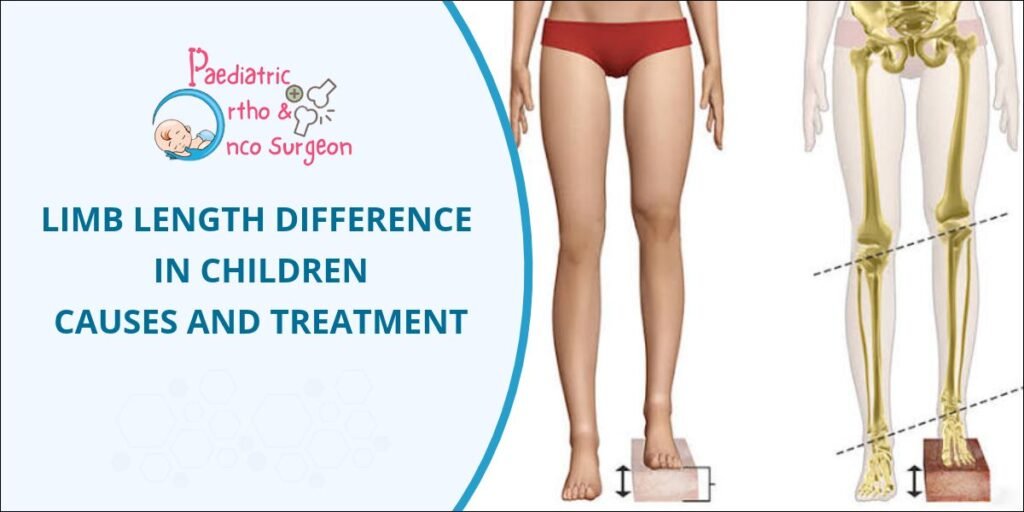
Limb length difference in children, also called leg length discrepancy, means one arm or leg is shorter than the other, and it can be caused by conditions present at birth, growth plate injuries, fractures, bone infections, hip disorders, neuromuscular conditions or tumours. Small differences are common and often need no treatment. Larger or growing differences may be managed with shoe lifts, guided growth surgery, limb lengthening or other procedures, depending on the child’s age and the expected difference at the end of growth. A paediatric orthopaedic surgeon can measure the difference and plan care. This guide explains the causes, signs, diagnosis and treatment options for limb length difference in children. What Is Limb Length Difference? Bones in children grow from growth plates near their ends. If growth in one limb is slowed, sped up or interrupted, the limbs can end up with different lengths. Leg length difference is noticed more often than arm length difference because it affects walking and posture. Types Structural: the bones of one leg are actually shorter Functional: the bones are equal, but a tilted pelvis, tight muscles or spine curve makes one leg appear shorter Causes of Limb Length Difference in Children Conditions present at birth Underdevelopment of a bone, such as congenital short femur or fibular hemimelia Hemihypertrophy, where one side of the body grows more than the other Developmental dysplasia of the hip (DDH) Some birth defects and syndromes Read more about congenital anomalies and birth defects. Injury Fractures involving the growth plate can slow or stop growth. Some fractures of the thigh bone can also cause temporary overgrowth of the injured leg. Infection Bone or joint infections in infancy and childhood can damage the growth plate. Prompt treatment of such infections is important. See our page on bone and joint infections. Hip conditions Perthes disease and slipped capital femoral epiphysis can shorten the leg on the affected side. Neuromuscular conditions Cerebral palsy, polio and nerve injuries can affect limb growth on one side. Tumours and vascular malformations Bone tumours and abnormal blood vessel growth can either slow or increase growth. Signs Parents May Notice Limping or an uneven walk Walking on the toes of the shorter leg Bending the knee of the longer leg while standing One shoulder or hip appearing higher Uneven trouser length or uneven skin creases in babies Back, hip or knee pain in older children Uneven shoe wear How Is It Diagnosed? Clinical examination The doctor observes the child standing and walking, checks hip, knee and ankle movement, and may place blocks under the shorter leg to level the pelvis. The spine is also checked to tell a functional from a structural difference. Imaging Standing full-length X-ray: measures both legs accurately Bone age X-ray: usually of the hand, to estimate remaining growth CT scan or MRI: in selected cases, such as suspected growth plate injury or tumour Predicting the final difference Because children are still growing, the surgeon estimates the difference expected at skeletal maturity using growth charts and repeated measurements over time. Treatment is planned based on this prediction, not only on the current difference. Treatment Options Treatment depends on the cause, the child’s age, remaining growth and the expected final difference. As a general guide: Observation Small differences that are not expected to grow may only need periodic review. Shoe lift A lift inside or under the shoe of the shorter leg can level the pelvis and improve walking for small to moderate differences. Guided growth (epiphysiodesis) This is a procedure to slow or stop growth at the growth plate of the longer leg, allowing the shorter leg to catch up. It is timed carefully based on the child’s remaining growth. Limb lengthening For larger differences, the shorter bone can be gradually lengthened. The bone is cut surgically and slowly separated with an external frame or an internal device, allowing new bone to form in the gap. This requires regular follow-up and physiotherapy. Learn more about limb deformity correction. Shortening of the longer limb In some older teenagers who have finished growing, shortening the longer bone may be discussed. Treating the cause and associated deformity Angular deformities, hip problems or tight soft tissues may need treatment along with the length difference. Living With Limb Length Difference Attend regular follow-up visits so growth can be tracked Use the prescribed shoe lift consistently Encourage physical activity as advised by the doctor Talk openly with your child and seek counselling support if they feel self-conscious Frequently Asked Questions Is it normal for children to have a small difference in leg length? Yes. A small difference of a few millimetres is common and usually causes no problems. Evaluation is advised when the difference is noticeable, increasing, or causes limping, back pain or posture changes. What causes one leg to be shorter than the other in a child? Causes include conditions present at birth, injuries to the growth plate, fractures that heal with shortening or overgrowth, bone or joint infections, hip conditions such as DDH or Perthes disease, neuromuscular conditions and some tumours. Sometimes no clear cause is found. How is limb length difference measured? The doctor examines the child standing and lying down and may use blocks under the shorter leg. A standing X-ray of both legs gives an accurate measurement. Bone age X-rays may be used to estimate remaining growth. Will a limb length difference increase as my child grows? It depends on the cause. Some differences stay the same, while others increase with growth. Regular follow-up helps track the change and plan treatment at the right time. Does every limb length difference need surgery? No. Small differences may need only observation or a shoe lift. Surgical options are considered for larger or progressive differences, based on the child’s age, expected growth and overall health. What is guided growth for leg length difference? Guided growth (epiphysiodesis) is a procedure that slows or stops growth at a growth plate in the longer leg so the shorter leg can catch
Limb Length Difference in Children: Causes and Treatment Read More »