
Scoliosis is a condition in which the spine develops an abnormal sideways curve. It is commonly noticed during childhood or the teenage years, especially during periods of rapid growth. In many teenagers, scoliosis may not cause pain or obvious symptoms, which is why early screening is important.
Parents may notice that one shoulder looks higher than the other or that their child’s posture seems uneven. Sometimes, however, the curve is difficult to see without a proper examination. Identifying scoliosis early can help doctors monitor the curve and decide whether treatment is needed.
What Is Scoliosis?
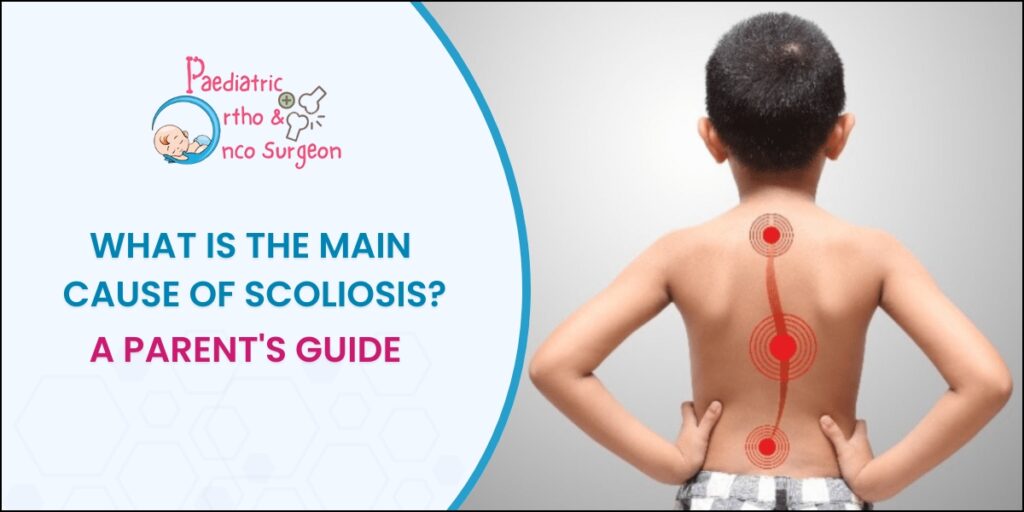
A healthy spine is relatively straight when viewed from the back. In scoliosis, the spine curves sideways and may also rotate slightly. The curve can develop in different parts of the spine and can range from mild to severe. The most common type in teenagers is adolescent idiopathic scoliosis, where the exact cause is not known. It often develops around puberty when children experience rapid growth. Scoliosis is not simply a result of sitting incorrectly or carrying a school bag on one shoulder. While posture can make a curve appear more noticeable, structural scoliosis involves changes in the alignment of the spine.
Why Is Scoliosis Screening Important for Teenagers?
Teenagers can grow quickly over a short period, and a spinal curve may become more noticeable during this time. A mild curve may not cause any discomfort, so parents may not realize there is a problem. Screening helps identify unusual spinal alignment at an early stage. If scoliosis is suspected, a doctor can perform a detailed examination and, when necessary, recommend imaging such as an X-ray.
Early identification does not necessarily mean that a teenager will need surgery. In fact, many mild curves only require regular observation while the child continues to grow.
Common Signs of Scoliosis Parents Should Watch For
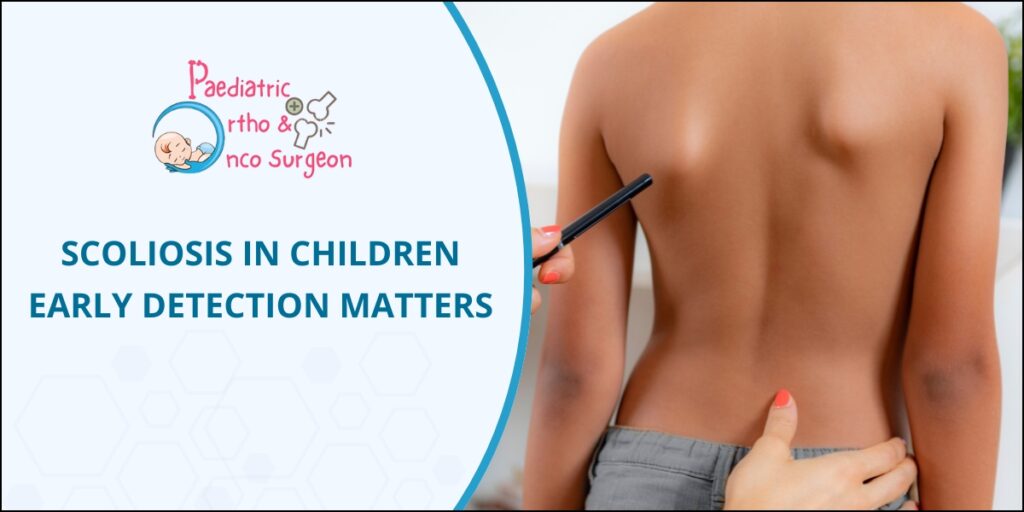
Scoliosis can be subtle. Some signs that may suggest a spinal curve include:
- One shoulder appearing higher than the other
- Uneven shoulder blades
- One side of the waist looking more curved
- One hip appearing higher than the other
- Clothes hanging unevenly
- The body leaning slightly to one side
- A visible curve in the back
- One side of the ribs becoming more prominent when bending forward
It is important to remember that these signs do not always mean a teenager has scoliosis. An orthopedic specialist can determine whether further evaluation is needed.
The Simple Forward-Bend Screening
One common way doctors look for signs of scoliosis is the forward-bend test.
The teenager is asked to stand and then slowly bend forward, allowing the arms to hang down. The doctor observes the back from behind and checks whether one side of the ribs or back appears higher than the other.
This test is useful for identifying possible spinal asymmetry, but it does not replace a professional diagnosis. If the examination suggests scoliosis, the doctor may recommend further assessment.
When Should Teenagers Be Screened?
Scoliosis can develop at different ages, but the teenage years are particularly important because of rapid growth during puberty.
Parents should pay attention to changes in posture and body symmetry, especially if their child is going through a growth spurt. A child who previously had a straight-looking back may develop noticeable asymmetry over a relatively short period.
Teenagers involved in sports, school activities, or regular physical activity may also have their posture observed during routine medical or sports examinations.
If there is a family history of scoliosis or a parent notices changes in the teenager’s back, discussing them with a pediatric orthopedic specialist is a good idea.
Does Scoliosis Cause Back Pain?
Many teenagers with scoliosis do not experience significant pain. This is one reason the condition can go unnoticed. However, some children may experience back discomfort, muscle fatigue, or stiffness. Severe or rapidly progressing curves can cause more noticeable symptoms. Back pain in a teenager should not automatically be blamed on scoliosis. There can be many other causes of back pain, so persistent, severe, or unusual pain deserves proper medical evaluation.
What Happens After Scoliosis Is Detected?
The next step depends on factors such as the size of the spinal curve, the teenager’s age, growth stage, and whether the curve appears to be progressing. For a mild curve, the doctor may recommend regular follow-ups to monitor changes as the teenager grows. For a moderate curve, treatment may sometimes include a spinal brace. Bracing is generally considered when a child is still growing and the curve has a higher risk of progressing.
For severe curves, surgery may be considered in selected cases. The decision is based on several factors and should be discussed carefully with a pediatric orthopedic spine specialist.
Can Scoliosis Be Prevented?
Most cases of adolescent idiopathic scoliosis cannot be prevented because the exact cause is unknown. However, parents can support overall musculoskeletal health by encouraging children to stay physically active, maintain a healthy lifestyle, and attend recommended health check-ups. Good posture is beneficial, but parents should not assume that poor sitting posture is the cause of structural scoliosis.
Why Early Evaluation Matters
The teenage years are an important period for spinal growth. A curve that is small today may remain stable, but some curves can progress as the child grows. This is why spotting changes early and following the recommended monitoring schedule can be valuable. Early evaluation also gives parents a better understanding of the condition and helps avoid unnecessary worry. If you notice uneven shoulders, a prominent shoulder blade, an uneven waist, or other changes in your teenager’s back, consider getting the spine examined rather than waiting for symptoms to appear.
Meet Dr. Vinod Dubey – Pediatric Orthopedic Spine Specialist in Mumbai
For parents looking for specialized evaluation, Dr. Vinod Dubey – Pediatric Orthopedic Spine Specialist in Mumbai provides pediatric orthopedic expertise for children and teenagers with spinal and musculoskeletal concerns. A specialist evaluation can help assess whether an apparent spinal curve is actually scoliosis, determine its severity, and guide parents regarding observation, further investigations, or appropriate treatment based on the child’s growth and individual condition.
Frequently Asked Questions
1. What is scoliosis?
Scoliosis is an abnormal sideways curvature of the spine, often detected during childhood or adolescence.
2. Can scoliosis occur without pain?
Yes. Many teenagers with scoliosis have no pain, especially when the curve is mild.
3. How is scoliosis detected?
A doctor may examine the teenager’s posture and perform a forward-bend test. X-rays may be recommended when needed.
4. Does every teenager with scoliosis need treatment?
No. Mild curves may only require regular monitoring, while larger or progressing curves may need treatment.
5. Can scoliosis get worse during puberty?
Some spinal curves can progress during periods of rapid growth, which is why monitoring during adolescence is important.